Before you get started
- Start with room use and furniture, not a universal spacing formula.
- Compare fixture output, glare, trim, and control options.
- Confirm ceiling access and finish-work responsibilities in the quote.
A ceiling grid is only part of the picture
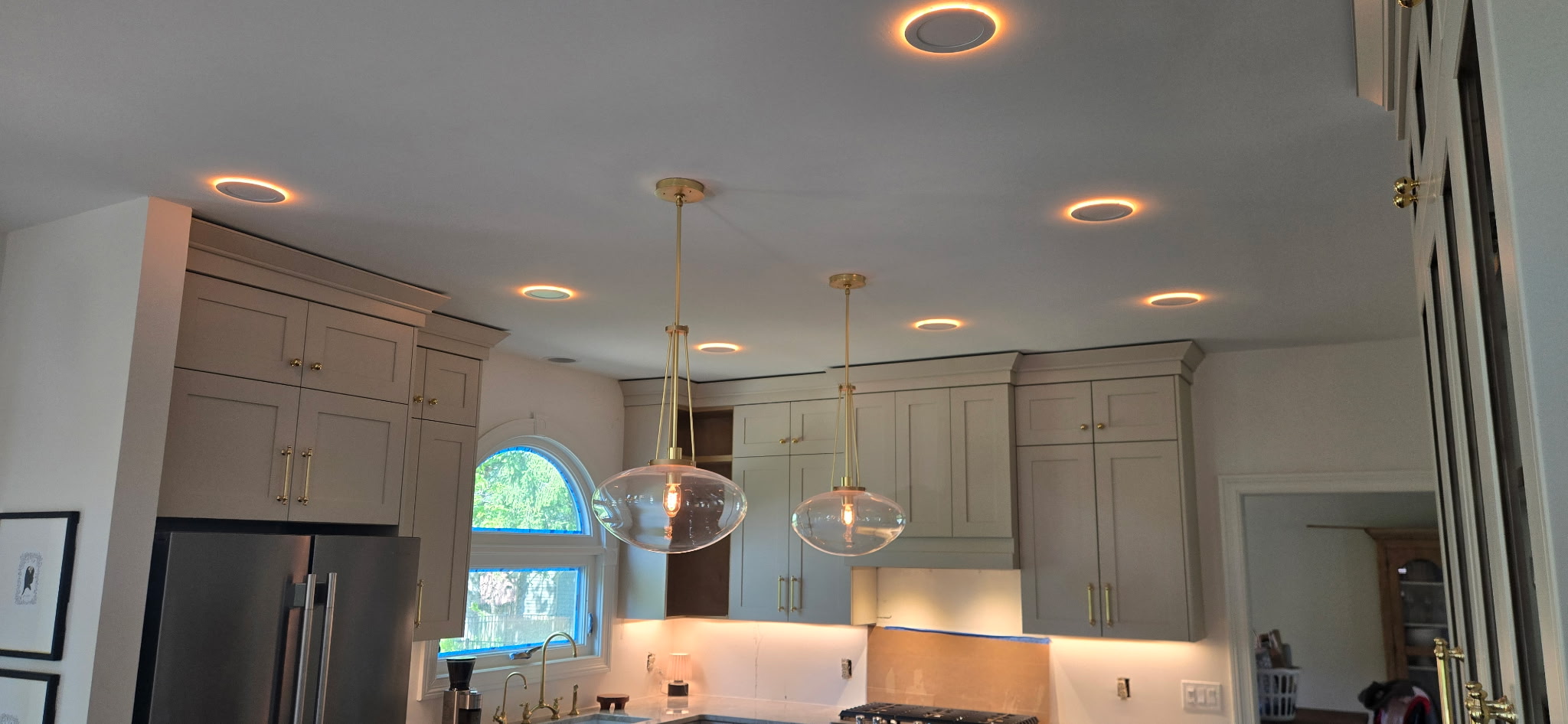
Recessed lighting can look tidy on a drawing and still miss what you need from the room. Begin with the activities below the ceiling: reading, preparing food, watching television, working, or moving between spaces. Tell your electrician where you want attention and where you prefer a quieter feel.
There is no single spacing shortcut that should decide the layout for every room. A small sitting room, a kitchen with tall cabinets, and a room with a sloped ceiling need different conversations. Ask for a plan connected to your space and the actual fixtures being considered.
Look at the room from the places you use
Take photographs from your sofa, favorite chair, and main doorway. Include the television, artwork, cabinets, or other important features in the frame. These views help communicate what matters to you and where a proposed fixture could become visually distracting.
Mark furniture on a simple sketch, even if it is not professionally drawn. Note anything that may move during a remodel. If you expect to rearrange the room frequently, say so; the design conversation should account for that flexibility before ceiling locations are agreed.
Different downlights create different choices
Manufacturer examples show why the fixture matters: HALO offers slim, adjustable, and regressed designs, with regressed options intended to reduce glare. Some products also offer selectable output or light appearance. These are choices to compare, not proof that one model is right for every home.
Ask to understand the visible trim, the appearance when switched off, the direction of the light, and how it looks at a lower setting. A product link or sample can make this discussion much clearer. Choose on the intended result as well as the fixture's size.
Plan with the existing lighting
Keep useful lamps, pendants, and work-surface lighting in the conversation. Recessed lights do not have to replace every other source. DOE's lighting design guidance emphasizes matching light to the activity and considering quality as well as quantity.
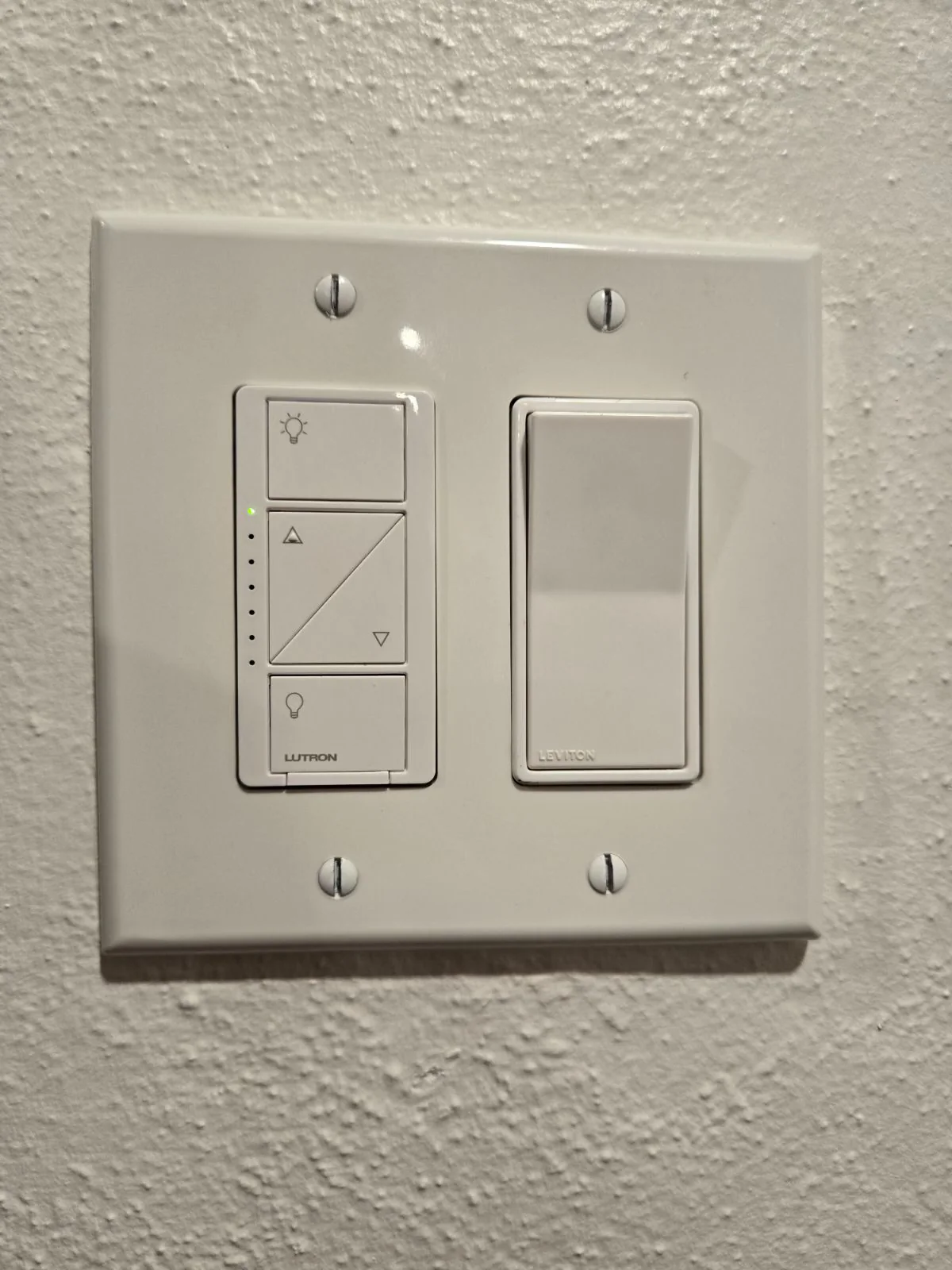
For an open living area, decide how the lighting should transition into the next room. Discuss which groups should be separately controlled. If you want dimmers or smart controls, ask the electrician to confirm compatibility with the proposed fixtures before you commit to either purchase.
Understand what is above the ceiling
You do not need to investigate concealed wiring yourself. Tell the electrician what you know: whether there is an attic above, another finished floor, a sloped roof, or a recent renovation. Product suitability and installation details should be assessed on site rather than assumed from a photograph.
Access, existing circuits, fixture selection, controls, and necessary finish work can change the scope. Ask whether the proposal includes patching old openings, moving existing fixtures, or painting. Also ask how any changes discovered during assessment will be explained and approved.
Your first conversation can be simple
Send Lytle Electric your city, room photos, approximate dimensions, and the outcome you are after. A short note such as 'the room is comfortable except at the reading chair' gives us something concrete to discuss.
Before installation, ask to review the agreed locations, fixture selection, control groups, and included work. That shared understanding is more useful than chasing a standard number of lights.
- Show the furniture and any features you want highlighted.
- Share links to fixtures already purchased or being considered.
- Mention glare, dimming, or brightness problems with the current setup.
Further reading & sources
Technical guidance is based on the sources below. Product instructions and your home’s actual conditions guide the work.